


RMFLS 2025: Lower-income Malaysians Show Progress in Planning and Financial Awareness

● 55% of lower-income Malaysians are now planning for retirement, up from 48% — signalling long-term mindset shifts
● Middle-income earners are saving less: only 23% put aside RM1,001–RM1,500 a month, while 39% now save below RM500.
● Rising insurance premiums led approximately 1 in 5 insured Malaysians to reduce or cancel their coverage in the past year.
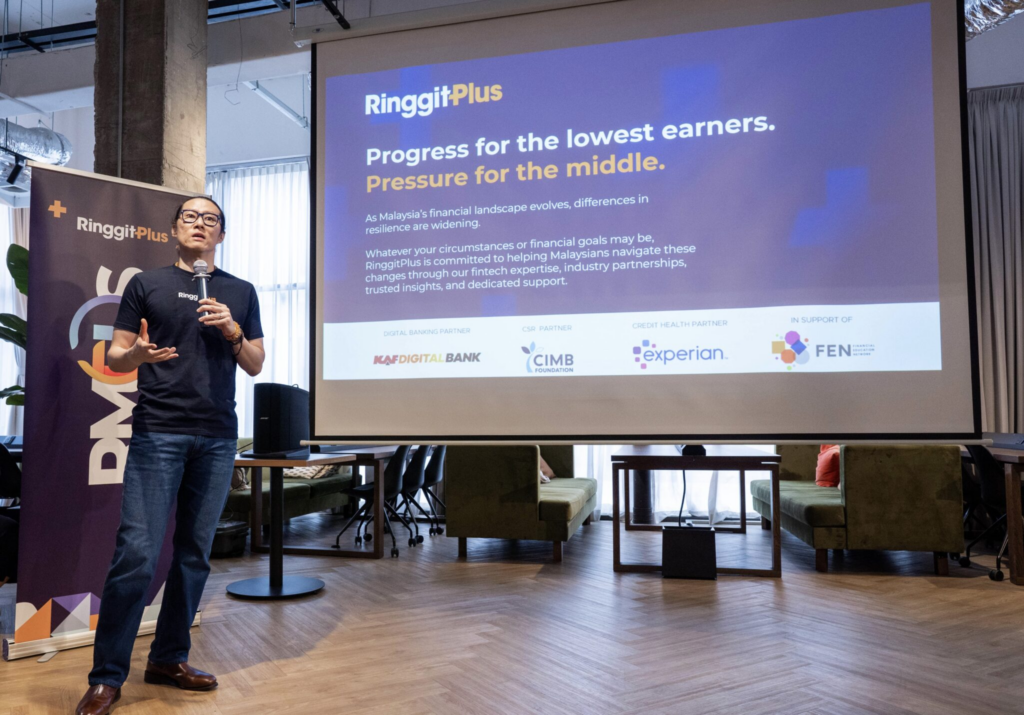
KUALA LUMPUR, 1 October 2025 – RinggitPlus today released the results of the 2025 Malaysian Financial Literacy Survey (RMFLS), the eighth annual study exploring how Malaysians manage, save, and think about their personal finances.
This year’s findings paint a mixed picture of progress: lower-income and Gen Z Malaysians are making financial strides, while middle-income Malaysians face growing challenges, despite broader improvements in retirement planning, credit awareness, and digital money management.
Lower-income Malaysians Show Progress in Planning and Financial Awareness
The 2025 survey reveals encouraging progress among lower-income Malaysians, with a higher proportion of respondents taking steps toward achieving long-term financial security. Notably, 55% of those earning below RM2,000/month say they have started planning for retirement — up from 48% in 2024. This reflects the growing impact of financial education initiatives, government support programmes, and the recent minimum wage increase in helping communities most affected by rising living costs.
Financial literacy is also improving: fewer lower-income Malaysians say they are unfamiliar with credit scores (40%, down from 45% last year), suggesting greater awareness of how credit impacts financial wellbeing.
There are signs of financial caution as well. 36% of lower-income respondents say they actively avoid using Buy Now, Pay Later (BNPL) services — the highest among all income segments. This may reflect a shift toward more careful debt management, especially as economic uncertainty has made borrowing riskier for vulnerable groups.
Middle-Income Group Reports Lower Savings and Growing Financial Pressure
In contrast, middle-income Malaysians, particularly those earning between RM5,000 and RM10,000/month, are seeing their savings power erode. They are the only income group to report a decline in savings, with only 23% managing to save between RM1,001 and RM1,500 a month, compared to 29% in 2024.
Meanwhile, the share of this segment saving less than RM500 monthly rose to 39% from 31% in 2024. Financial resilience is weakening too, with only 27% saying they could sustain themselves for over six months without income, compared to 32% last year. This is also the only income group that is cutting back on leisure, eating out, and subscriptions to stretch its budget.
Financial sentiment within the middle-income segment has also softened. Although nearly half of Malaysians (48%) believe their financial situation has improved compared to last year, this optimism was not shared equally: only 54% of middle-income earners feel they are better off, down from 58% in 2024. These findings suggest that while Malaysia’s middle-income continues to benefit from broad-based support measures such as fuel subsidies, they may be quietly slipping into financial vulnerability — with reduced savings and weaker financial buffers compared to last year.
Gen Z Embraces Financial Tools and Healthy Money Habits
At the same time, younger Malaysians are emerging as a bright spot in the 2025 report. 40% of Gen Z respondents now save more than RM500 monthly, up from 36% last year, while the percentage of Gen Z who say they don’t save at all has fallen to just 11% – the lowest across all generations. Their growing interest in financial planning is also reflected in the 57% who have started preparing for retirement, compared to just 53% in 2024. This generation is turning to digital tools for support, with 62% of Gen Z reporting that they use AI-powered budgeting apps, robo-advisors, or financial chatbots to help manage their finances.
Rising Costs Are Forcing Malaysians to Rethink Insurance Coverage
Rising insurance costs are already having a significant impact on Malaysians across the board. 22% of policyholders have either switched to a cheaper plan or cancelled at least one policy in the past year due to affordability concerns — a trend most prevalent among lower-income Malaysians. Despite individual efforts to plan for the future, 43% of Malaysians remain without medical insurance, while 15% rely solely on company-issued medical cards. Meanwhile, less than half (48%) report having a life insurance or Takaful policy, suggesting that financial protection continues to be deprioritised amid other cost pressures.
More Malaysians Are Planning for Retirement and Learning About Money Through Social Media
Malaysians are becoming increasingly financially aware, with 64% now stating that they’ve started planning for retirement, up from 60% in 2024. Confidence in EPF savings is also rising, with 22% of respondents believing their funds will be sufficient, up from 19% last year, a modest but encouraging shift observed across all income groups.
This growing awareness tracks with other signs of improved financial literacy. More Malaysians now understand credit scores, with fewer than half (47%) stating they are unfamiliar with what a credit score is or its meaning, a notable improvement from 53% in 2024.
As Malaysians seek to educate themselves, social media remains the most trusted source of financial information. 68% of respondents now turn to platforms like Instagram, TikTok, and Facebook to learn about money matters.
Malaysians Prefer Safer Investments Unless They’re Young
While half of Malaysians still haven’t started investing, those who do are making interesting choices across generations.
Traditional options remain the most popular; ASNB funds (64%), unit trusts (42%), and precious metals (38%) top the national list. However, younger Malaysians are showing different preferences: cryptocurrency and robo-advisors rank among the top five with Gen Z investors, while local stocks are more common among millennials and Gen X.
These trends reflect a cautious national approach overall, but with pockets of experimentation driven by youth.
Time to Shift the Focus to Malaysia’s Middle Class
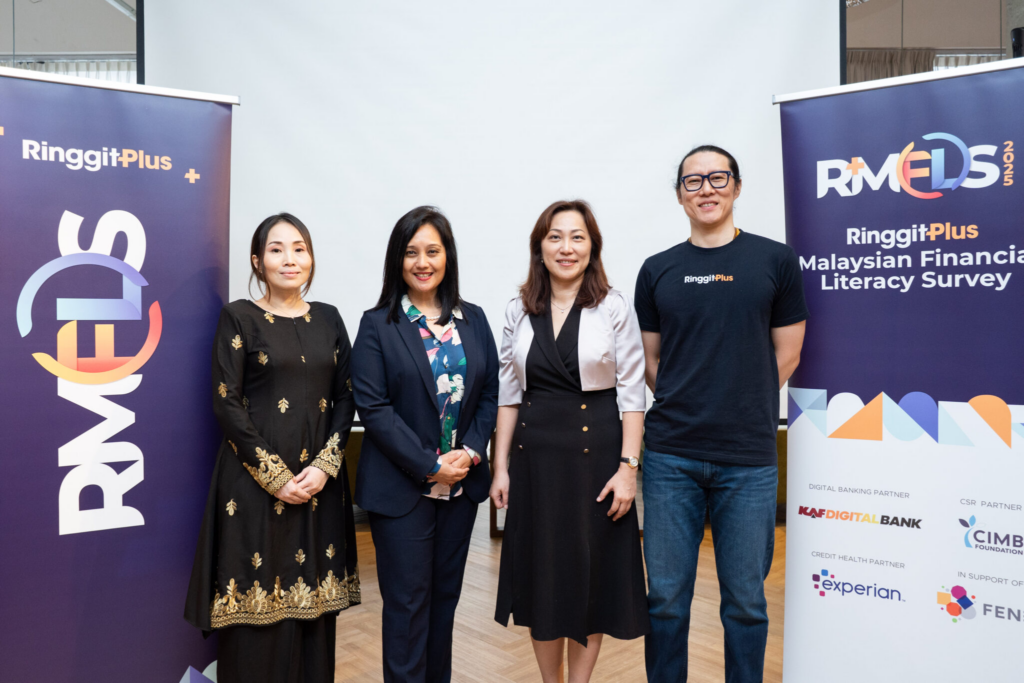
“RMFLS 2025 reflects the resilience of the Malaysian people. Many lower-income and Gen Z Malaysians are taking steps in the right direction — saving regularly, planning for retirement, and building good financial habits despite the challenges they face,” said Yuen Tuck Siew, CEO of RinggitPlus.
“Our findings also reveal that Malaysia’s middle class deserves renewed attention and support. This resilient group continues to work hard despite facing tighter household budgets and reduced savings capacity. As Malaysia progresses toward developed nation status, ensuring our middle class has the right tools and opportunities to rebuild their financial strength will be crucial for sustainable economic growth.”
The RinggitPlus Malaysian Financial Literacy Survey (RMFLS) is endorsed by the Financial Education Network (FEN) and supported by KAF Digital Bank, CIMB Foundation, and Experian. Conducted annually via an online survey of over 3,000 respondents across Malaysia, RMFLS continues to provide timely insights into the nation’s financial health, behaviours, and priorities.
To learn more about the 2025 RinggitPlus Malaysian Financial Literacy Survey, visit RinggitPlus’ website or follow RinggitPlus’ social media channels (Instagram and Facebook).
###
About RinggitPlus
RinggitPlus.com is Malaysia’s leading financial comparison website. Every day, we help you get more for your money – whether you’re applying for a credit card, personal loan or a new insurance plan, planning the best mortgage for your dream house and much more. Headquartered in Kuala Lumpur, RinggitPlus is one of several brands owned and operated by FinTech company Jirnexu Sdn Bhd (co. no. 1081989-D). We made our start back in 2012 when the company’s co-founders met and realised that they share a mutual passion for giving individuals the financial advice and tools they needed to spend, manage and save money wisely.
